PEOPLE ARE CUTTING
THEM DOWN.
Cameras are being spray-painted, sawn off, shot and driven into across the country. It is happening, so this project documents it: how often, where, what people are charged with, what it costs, and whether it achieves anything. That last question has an answer, and it is not the one the act implies.
Flockinghell does not encourage, assist, or celebrate damaging equipment. Nothing on this page is instruction, and no footage is hosted, embedded, or solicited. The reason is practical as much as legal: as the record below shows, the people doing this are collecting felony charges while the cameras go back up, and the deployments that actually ended were ended in public meetings.
- Cases documented
- 11
- Cameras affected
- 43
- Cases with a felony count
- 6
- Replacement cost per camera
- $800-$3,000
What people are actually charged with
The charge follows the value of the hardware, and the hardware is expensive. Police and prosecutors in these cases put a single camera between $800 and $2,800, which in most states lifts criminal damage from a summary offence to a felony almost immediately. Hitting devices in more than one town multiplies the counts rather than averaging them: one nineteen-year-old was charged across two jurisdictions and admitted damaging cameras in two more, including one in another state.
Documented cases
No names, with one stated exception. Everyone here has been charged and, in most of these cases, not tried. They are private individuals, and attaching a permanent search result to someone who has not been convicted adds nothing to the analysis. Age and jurisdiction carry the pattern. The exception is a candidate for public office, where the candidacy is itself why the case is newsworthy; where a name appears, the reason for it appears beside it.
- Winona, Minnesota
- Accused
- Age not reported
- Devices
- 10
- Charges as filed
- No arrests. Police describe a coordinated theft: every one of the city's eight Flock cameras was taken between 29 July and 1 August, with the poles cut through near the base and discarded in the weeds while the cameras themselves were carried off. Two further cameras on the Mississippi River Bridge, owned by Buffalo County, went the same way.
- Cost stated
- Police put replacement at about $3,000 per camera and pole. An officer noticed one downed pole on patrol, checked the rest, and found none of the cameras had reported activity for 24 hours. Minnesota has seen a run of these: six were hit in Edina over the same period.
- Blount County and Maryville, TennesseeFELONY COUNT
- Accused
- Adam Lee Heimerman, age 37Named here, unlike every other entry, because he is an independent candidate for the U.S. House in Tennessee's 2nd district and the candidacy is why the case is newsworthy. He is charged, not convicted, and appears in court on 5 August 2026.
- Devices
- 4
- Charges as filed
- Four counts of felony vandalism, filed by the Blount County Sheriff's Office and Maryville Police Department. Bond set at $40,000, with a court appearance on 5 August 2026.
- Cost stated
- No replacement figure was given by police in the reporting. Four ALPR units were shot between 14 and 22 July 2026, three in Blount County and one in Maryville; the damage was discovered on 25 July.
- Stated motive
- None reported. Police say he admitted to investigators that he used a gun to shoot four ALPR systems; no reason for doing so is recorded in the reporting.
- Avon, Colorado
- Accused
- Age not reported
- Devices
- 3
- Charges as filed
- No arrests reported. In the early morning of 18 July camera poles were cut and two devices stolen: two speed-enforcement cameras and one Flock plate reader.
- Cost stated
- The town put the 18 July incident at $52,500 in damages. The police department's Facebook post about it went viral with tens of thousands of reactions, and the town council subsequently took public comment on the Flock contract, which is near renewal and terminable on 30 days' notice.
- Atlantic Beach and Jacksonville Beach, FloridaFELONY COUNT
- Accused
- Age 19
- Devices
- 6
- Charges as filed
- Three counts of criminal mischief over $200 in Atlantic Beach, plus two felony vandalism counts in Jacksonville Beach
- Cost stated
- Atlantic Beach police put replacement at $800 per camera for three cameras.
- Stated motive
- An investigator recorded that he made statements about disliking Flock cameras and not trusting licence plate readers.
- Troy, New YorkFELONY COUNT
- Accused
- Age 25
- Devices
- 1
- Charges as filed
- Second-degree criminal mischief and attempted second-degree criminal mischief. Arraigned in Troy City Court and released.
- Cost stated
- Police responded around 1:30 a.m. to reports of someone damaging a camera at 126th Street and 2nd Avenue and say the man was carrying a saw believed used to cut it down. Three other Troy cameras were vandalised the prior week; police say they do not believe he was connected to those or to earlier graffiti.
- Monterey County, California
- Accused
- Age 40
- Devices
- 3
- Charges as filed
- Arrested and accused of attacking at least three cameras; held in custody
- Cost stated
- Reported damages in the thousands of dollars.
- Lisle, IllinoisFELONY COUNT
- Accused
- Age not reported
- Devices
- 5
- Charges as filed
- Each of three men charged with two counts of theft of government property and two counts of criminal damage to government-supported property
- Cost stated
- Prosecutors valued each of the five cameras at about $2,800.
- Troy, New YorkFELONY COUNT
- Accused
- Age 25
- Devices
- 1
- Charges as filed
- Second-degree criminal mischief, and attempted second-degree criminal mischief
- Pocatello, IdahoFELONY COUNT
- Accused
- Age 20
- Devices
- 2
- Charges as filed
- Felony malicious injury to property, and failing to report a crash
- Cost stated
- Reported as the first case of its kind in Idaho.
- Alexandria, Virginia
- Accused
- Age not reported
- Devices
- 2
- Charges as filed
- Arrested for destruction of property
- Houston, Texas
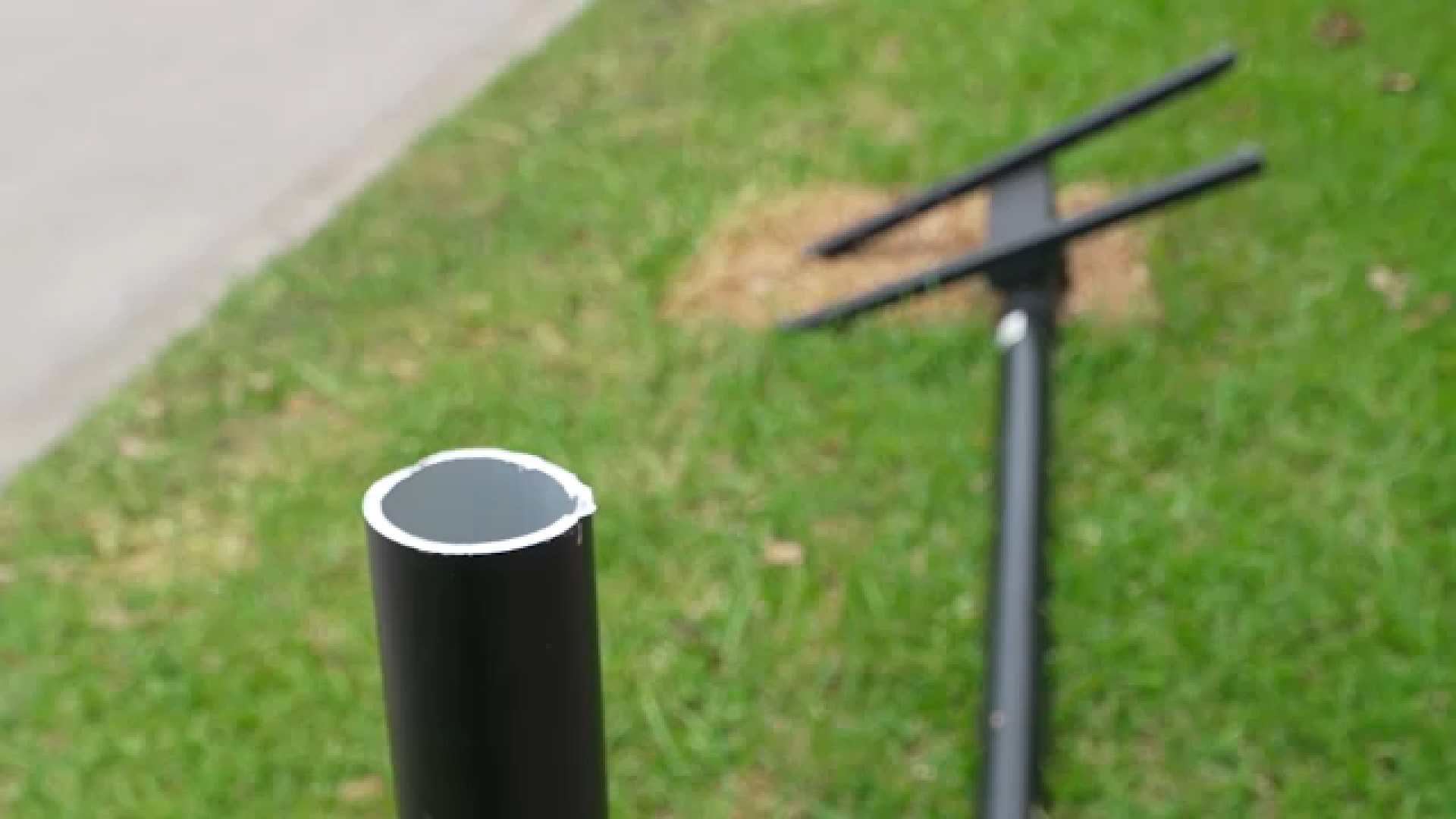
PHOTO: ABC13 HOUSTON - Accused
- Age not reported
- Devices
- 6
- Charges as filed
- No arrests. Houston police confirmed an open investigation into who is cutting the cameras down.
- Cost stated
- At least half a dozen cameras cut down or spray-painted across the city in a single week, several near Washington Avenue and Memorial Park.
Does it work?
On the evidence so far, no. A destroyed camera is a replaced camera: the hardware is a line item to the vendor and the operator, and the mount usually survives to hold the next one. Nothing in the reporting collected here describes a jurisdiction that ended a programme because devices were damaged.
Set that against the reports desk, where 16 deployments were ended or verifiably removed. Every one of those went through a council vote, a contract decision, or a records-driven review. In Syracuse the readers came down and stayed down. In Newport the contract was dropped before it was signed. Those outcomes are durable in a way a cut cable is not, and nobody involved acquired a criminal record.
There is a second cost that is easy to miss. Damage hands an operator the cleanest possible argument for keeping the system: it converts a debate about warrantless surveillance into a debate about property crime, and it gives officials a reason to stop discussing the contract at all. The roadside safety reporting is the counter-example worth studying, where one person with a camera and a tape measure triggered a company-wide audit.
If you want the cameras gone
The routes that have worked are on this site: find the contract and its renewal date, request the search logs and sharing partners, read what comes back, and turn up when it is on the agenda. The action playbook sets out the sequence, and the ACLU's campaign maintains organising resources.